Tirta Empul Temple: A Sacred Oasis in Bali
I still remember my first visit to Tirta Empul Temple in Bali. It was a humid afternoon in June, and I had just finished a morning of exploring the nearby town of Tampaksiring. As I walked through the temple’s entrance, the sound of gushing water and the scent of frangipani flowers enveloped me, immediately transporting me to a world of tranquility. For the next few hours, I immersed myself in the temple’s serene atmosphere, learning about its rich history and significance in Balinese Hinduism.
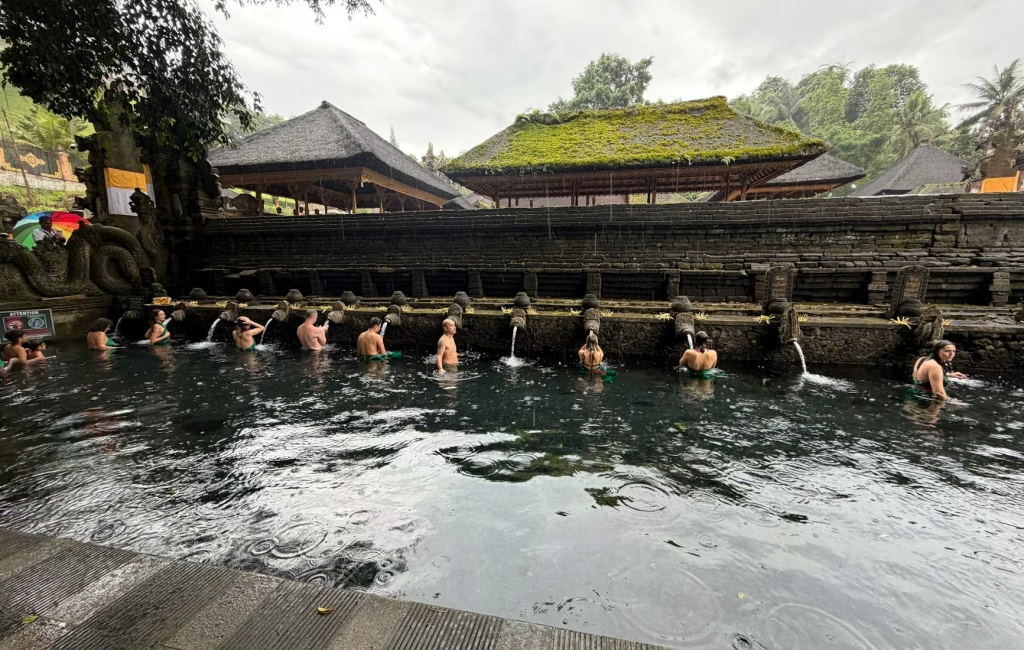
Tirta Empul Temple is a must-visit destination for anyone interested in Balinese culture and spirituality. Located in the heart of Bali, this sacred water temple is a place of great beauty and spiritual significance. The temple’s name, Tirta Empul, literally means ‘holy water spring,’ and it’s here that you’ll find 12 holy springs, each believed to possess healing properties.
As I walked through the temple, I was struck by the attention to detail and craftsmanship that had gone into its construction. The intricate carvings, the ornate gates, and the serene gardens all seemed to whisper stories of the past. It was as if the temple was alive, and I felt grateful to be a part of its sacred energy.
A Brief History of Tirta Empul Temple
Tirta Empul Temple has a rich history dating back to the 10th century. According to legend, the temple was built by the King of Gelgel, a powerful Balinese kingdom that once ruled the island. The king, named Srikaema, was said to have been cured of a deadly illness by the holy water of the spring, and in gratitude, he built the temple to honor the gods.
Over the centuries, Tirta Empul Temple has undergone several renovations and expansions. In the 17th century, the Dutch colonial powers occupied Bali, and they made significant changes to the temple’s architecture. However, despite these changes, the temple’s essence remains unchanged, and it continues to be a place of great spiritual significance for the Balinese people.
Visiting Tirta Empul Temple: What to Expect
Visiting Tirta Empul Temple is a relatively straightforward process. The temple is open daily from 8 am to 5 pm, and admission is IDR 15,000 (approximately USD 1). You’ll need to wear a sarong, which can be rented for IDR 5,000 (approximately USD 0.35), and you’ll also need to remove your shoes before entering the temple grounds.
As you walk through the temple, you’ll encounter numerous shrines, temples, and pavilions. Be sure to take your time and soak in the atmosphere, as each of these structures holds significant spiritual importance. Don’t be afraid to ask questions or take photos – the locals are generally friendly and welcoming.
Practical Tips for Visiting Tirta Empul Temple
- Bring a sarong and a change of clothes: While sarongs can be rented at the temple, it’s a good idea to bring your own. Additionally, you may want to change into a more modest outfit before entering the temple.
- Respect the locals and their customs: Tirta Empul Temple is a sacred site, and it’s essential to respect the locals and their customs. Remove your shoes, don’t touch the shrines or temples, and avoid taking photos of people without their permission.
- Explore the surrounding town of Tampaksiring: Tampaksiring is a charming town with a rich history and culture. Take some time to explore its streets, visit the nearby water palace, and try some of the local cuisine.
- Be mindful of the dress code: While the temple is relatively relaxed, it’s still essential to dress modestly. Avoid revealing clothing, and opt for a sarong or a lightweight dress instead.
Insider Tips for Tirta Empul Temple
One of the best ways to experience Tirta Empul Temple is to visit at sunrise or sunset. The light is soft and golden, and the atmosphere is peaceful and serene. If you’re feeling adventurous, take a dip in the holy spring – it’s said to have healing properties, but be sure to follow the local customs and respect the temple’s rules.
Another insider tip is to explore the temple’s surroundings. Take a walk through the nearby gardens, visit the nearby water palace, and try some of the local cuisine. You’ll find a range of restaurants and cafes serving traditional Balinese dishes, from nasi goreng to satay.
A Personal Take on Tirta Empul Temple
For me, Tirta Empul Temple is more than just a place of worship – it’s a symbol of Bali’s rich history, culture, and spirituality. It’s a place where you can connect with the natural world, learn about the local customs, and experience the island’s unique energy. Whether you’re a spiritual seeker, a culture vulture, or simply a curious traveler, Tirta Empul Temple is an absolute must-visit destination.
As I left the temple that day, I felt a sense of peace and contentment that lingered long after I left the island. It was as if the temple’s energy had seeped into my soul, and I knew that I would return again and again to experience its magic.
FAQs
Q: What is the best time to visit Tirta Empul Temple? A: The best time to visit Tirta Empul Temple is early in the morning or late in the afternoon, when the light is soft and the atmosphere is peaceful.
Q: Can I take photos inside the temple? A: Yes, you can take photos inside the temple, but be sure to ask permission from the locals and respect their customs.
Q: Is it safe to drink the holy water? A: While the holy water is said to have healing properties, it’s generally not recommended to drink it. Stick to the local water sources and avoid drinking tap water.