Discovering Suku Bali: A Journey of Self-Discovery
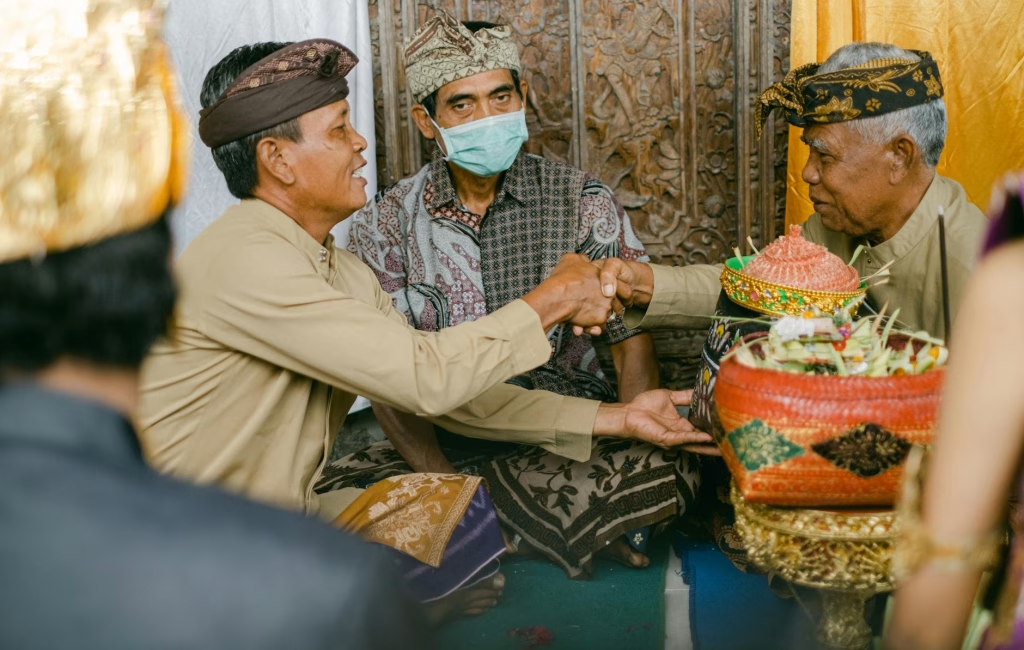
As I sat sipping coffee at the local warung in Ubud’s Monkey Forest Road, I couldn’t help but feel a pang of nostalgia wash over me. It had been years since I first arrived in Bali, and yet, the island still held secrets waiting to be uncovered. My latest obsession was Suku Bali, the traditional villages scattered across the island, each with its unique character and charm. I had heard whispers of a village where the locals still practiced traditional crafts, where the air was sweet with the scent of frangipani, and where time stood still. Intrigued, I set out to explore these enigmatic villages and unravel the secrets of Suku Bali.
A Village of Traditional Crafts
I headed to the village of Mas, a mere 10 kilometers north of Ubud. As I walked through the narrow streets, I was struck by the sense of community that permeated every corner. Artisans of all ages were huddled over their workbenches, chiseling, painting, and weaving with precision and passion. I watched in awe as a young girl expertly crafted a intricate woodcarving, her fingers moving with a fluidity that belied her age.
I spent hours chatting with the locals, learning about their crafts and the history behind them. The villagers were warm and welcoming, eager to share their stories and traditions with me. As I left Mas, I felt a sense of gratitude for having experienced a slice of authentic Bali. The price of a traditional woodcarving? A mere 200,000 IDR (approximately $14 USD).
Exploring the Countryside
If you’re looking to escape the crowds and experience the real Bali, I recommend renting a motorbike and hitting the countryside. The scenery is breathtaking, with lush green rice fields and rolling hills as far as the eye can see. I spent a day exploring the villages of Tegalalang and Ubud, taking in the stunning views and stopping at local warungs for snacks and refreshments.
One of the highlights of my journey was visiting a local market in the village of Tegalalang. The air was thick with the scent of fresh produce, and the vendors were eager to haggle. I picked up a few souvenirs, including a beautiful handwoven basket and a packet of local spices. The prices were incredibly reasonable, with the basket costing me a mere 150,000 IDR (approximately $10 USD).
Practical Tips for Exploring Suku Bali
- Rent a motorbike to explore the countryside. It’s the best way to see the real Bali.
- Learn a few basic Indonesian phrases, such as ‘terima kasih’ (thank you) and ‘saya suka’ (I like). The locals will appreciate the effort.
- Don’t be afraid to haggle at the markets. It’s all part of the fun!
- Respect the local customs and traditions. Dress modestly and remove your shoes when entering temples or homes.
A Personal Take on Suku Bali
Suku Bali is more than just a collection of traditional villages. It’s a journey of self-discovery, a chance to connect with the local culture and community. As I reflect on my experiences, I realize that Suku Bali has left an indelible mark on my heart. It’s a reminder of the beauty and simplicity of life, and the importance of preserving our cultural heritage.
FAQs
Q: What is Suku Bali? A: Suku Bali refers to the traditional villages scattered across the island of Bali, each with its unique character and charm.
Q: How do I get to Suku Bali? A: The best way to explore Suku Bali is by renting a motorbike and hitting the countryside. You can also take a taxi or ride-hailing service from Ubud or other major towns.
Q: What is the cost of visiting Suku Bali? A: The cost of visiting Suku Bali is relatively low, with motorbike rentals starting from 50,000 IDR (approximately $3.50 USD) per day. Accommodation options range from budget-friendly guesthouses to luxury resorts, depending on your budget.