A Language of the People
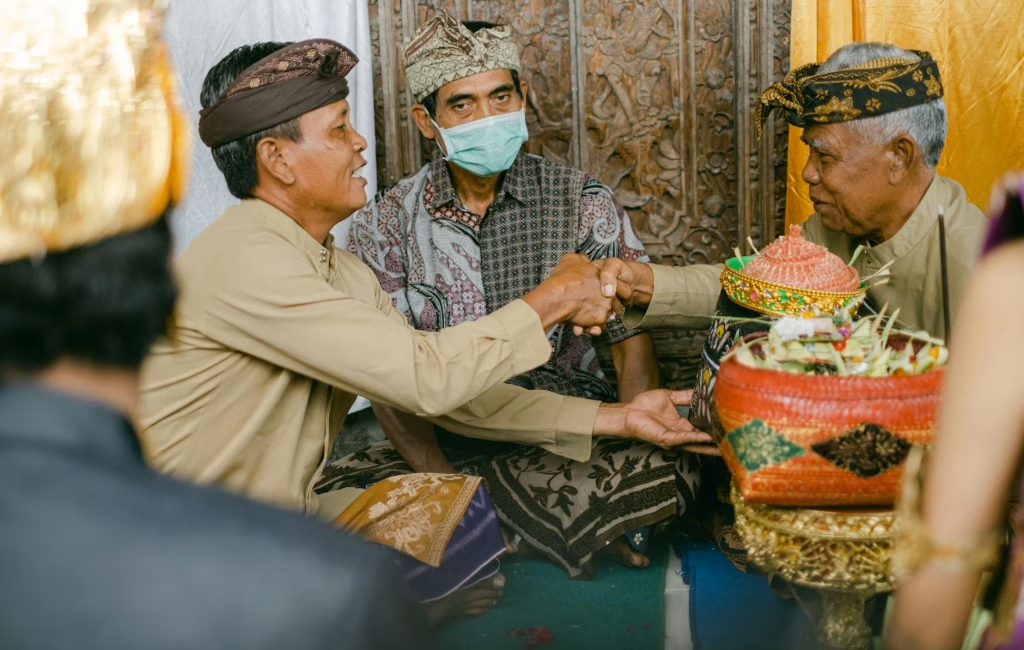
I still remember the first time I tried to communicate with a local in Ubud. I had been living in Bali for a few months, but my Bahasa Indonesia was still limited to basic phrases. A kind old man at the market, Pak Iman, saw my struggle and approached me with a warm smile. ‘Selamat pagi, mister!’ he said, and I replied with a hesitant ‘Selamat pagi, Pak!’ He chuckled and began speaking to me in Bahasa Bali, which I didn’t understand at all. But it didn’t matter – he was speaking from the heart, and I felt a deep connection to the culture.
Bahasa Bali, also known as Basa Bali, is the official language of Bali, spoken by over 3 million people on the island. It’s a unique blend of Austronesian, Melanesian, and Austronesian languages, with its own distinct grammar and vocabulary. As a foreigner, learning Bahasa Bali can be challenging, but it’s also incredibly rewarding.
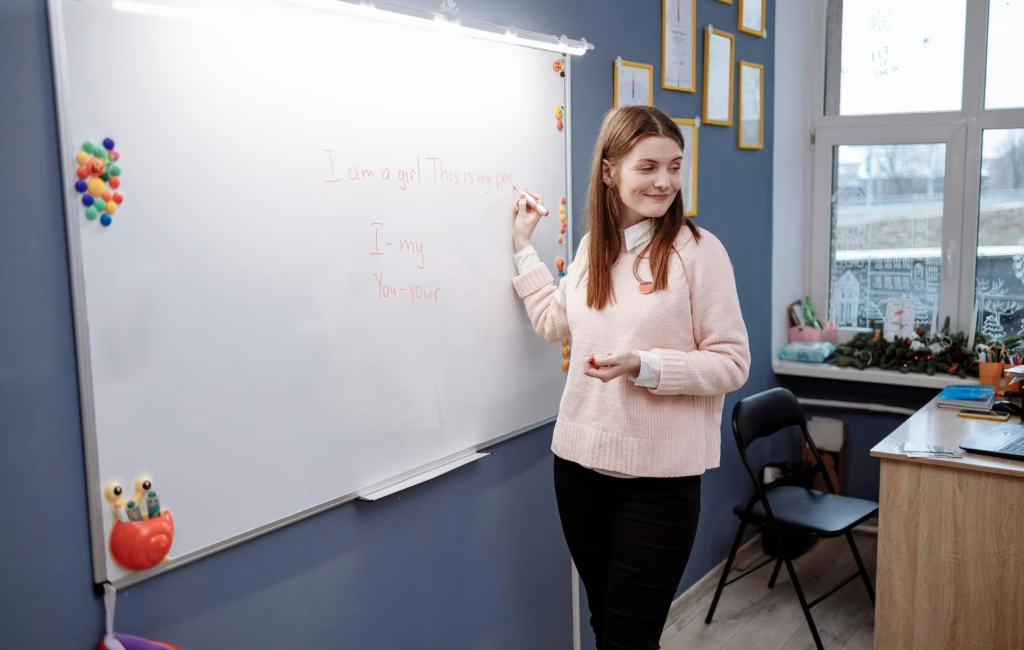
For me, learning Bahasa Bali was a journey of self-discovery. I started taking classes at a local language school in Ubud, where I met fellow students from all over the world. We’d practice speaking and listening to each other, and I was amazed at how quickly we picked up the basics. My teacher, Ibu Wayan, was patient and kind, and she taught me the nuances of the language that I wouldn’t have learned otherwise.
Learning Bahasa Bali
So, how can you learn Bahasa Bali? Here are a few tips:
- Take classes: Look for language schools in Ubud, Canggu, or Seminyak that offer Bahasa Bali classes. Ibu Wayan’s school in Ubud is a great option, and they offer private and group classes.
- Use language learning apps: There are several apps, such as Duolingo and Babbel, that offer Bahasa Bali courses. While they’re not as immersive as taking classes, they’re a great starting point.
- Listen to Bahasa Bali media: Watch Balinese TV shows and movies, or listen to podcasts and radio shows in Bahasa Bali. This will help you get used to the sound and rhythm of the language.
- Practice with locals: Find a language exchange partner or tutor who is a native speaker. This will help you improve your speaking and listening skills.
A Practical Guide to Using Bahasa Bali
So, what can you do with Bahasa Bali? Here are a few practical tips:
- Order food: Learn basic phrases like ‘Saya ingin makan…’ (I want to eat…) and ‘Harga berapa?’ (How much is it?). This will help you order food at local warungs and restaurants.
- Navigate the island
Learn phrases like ‘Saya ingin ke…’ (I want to go to…) and ‘Berapa jarak?’ (How far is it?). This will help you navigate the island and find your way around.
- Respect the culture: Learn basic phrases like ‘Selamat pagi’ (Good morning) and ‘Terima kasih’ (Thank you). This will show respect for the culture and people.
- Connect with locals: Learn phrases like ‘Saya suka…’ (I like…) and ‘Saya tidak suka…’ (I don’t like…). This will help you connect with locals and build relationships.
Prices and Costs
The cost of living in Bali is relatively low, and you can find affordable accommodations, food, and activities. Here are some approximate prices:
- Accommodation: A one-bedroom apartment in Ubud costs around IDR 1,500,000 – 2,500,000 (USD 100 – 170) per month.
- Food: A meal at a local warung costs around IDR 10,000 – 20,000 (USD 0.70 – 1.40) per person.
- Activities: A traditional dance performance costs around IDR 50,000 – 100,000 (USD 3.50 – 7) per person.
FAQs
Q: Is Bahasa Bali difficult to learn?
A: While Bahasa Bali has a unique grammar and vocabulary, it’s not necessarily difficult to learn. With dedication and practice, you can pick up the basics quickly.
Q: Can I use Bahasa Indonesia to communicate in Bali?
A: Yes, many locals speak Bahasa Indonesia, especially in tourist areas. However, learning Bahasa Bali will help you connect with the culture and people on a deeper level.
Q: Are there any resources for learning Bahasa Bali?
A: Yes, there are several language schools, apps, and online resources available for learning Bahasa Bali.