I still remember the first time I saw a traditional Balinese dancer in full regalia. I was attending a ceremony at the beautiful Tirta Empul Temple in Tegalalang, Ubud, and the dancer’s intricate headdress and elaborate costume left me in awe. As I watched, a young girl approached me and asked if she could try on my camera strap. I handed it over, and she began to take pictures of the dancer, giggling with delight. It was moments like these that made me fall in love with the island of Bali and its rich cultural heritage.
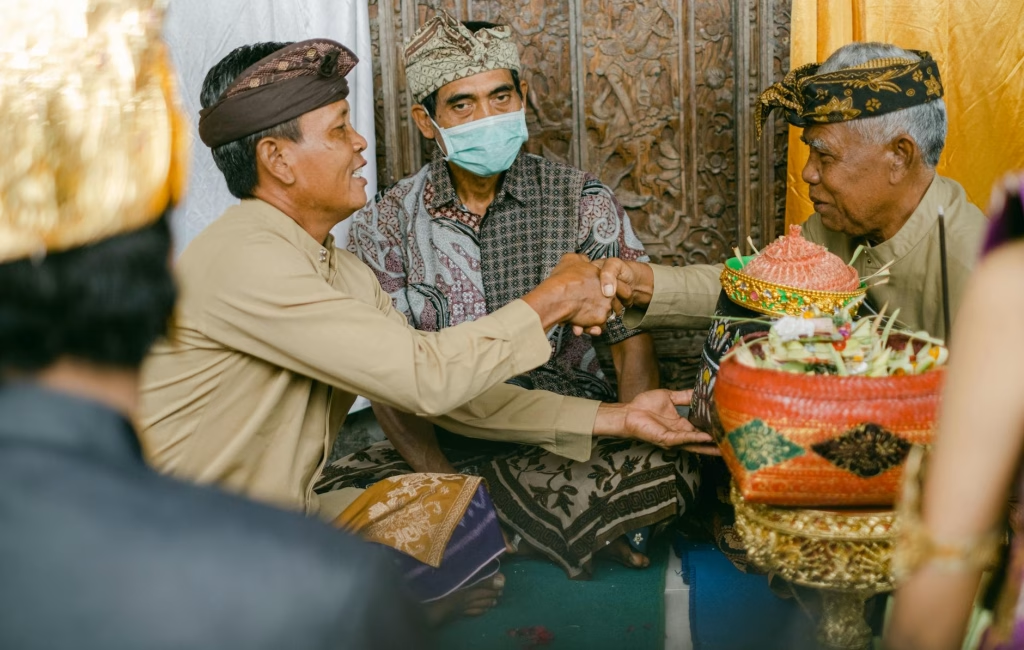
pakaian adat (traditional clothing) is an integral part of Balinese culture, and it’s something that I’ve had the pleasure of observing and learning about over the years. From the elaborate kebaya tops to the ornate sarongs, each piece of clothing is carefully crafted and worn with pride. But what I love most about pakaian adat is its connection to the island’s history and spirituality. Each piece of clothing is imbued with meaning and symbolism, and wearing it is a way of honoring the gods and showing respect for one’s ancestors.
So, if you’re interested in learning more about pakaian adat, where do you start? For me, it all began with a visit to the Ubud Art Market. This bustling marketplace is a treasure trove of traditional Balinese clothing, as well as handmade crafts and souvenirs. I spent hours browsing the stalls, chatting with the vendors, and learning about the different types of clothing on display. Be prepared to haggle, and don’t be afraid to ask questions!
One of the most interesting things I learned about pakaian adat is the significance of the different colors and patterns used. In Balinese culture, colors are believed to have spiritual significance, and each one is associated with a particular deity or aspect of life. For example, the color red is associated with the goddess Durga, while the color blue is associated with the god Vishnu. By wearing clothing in these colors, individuals are able to connect with the divine and show respect for the gods.
Of course, no discussion of pakaian adat would be complete without mentioning the famous ‘kebaya’ top. This intricate, beaded top is worn by women during special occasions such as weddings and temple ceremonies. What I love about the kebaya is its beauty and craftsmanship. Each bead is carefully placed and sewn onto the fabric, creating a truly stunning piece of art. If you’re interested in learning more about the kebaya, I recommend visiting the local market in Ubud, where you can find vendors selling handmade kebaya tops starting from around 500,000 IDR (around $35 USD).
Practical Tips for Exploring Pakaian Adat
- Learn about the colors and patterns: Before you start exploring pakaian adat, take some time to learn about the different colors and patterns used. This will help you appreciate the significance of the clothing and give you a deeper understanding of the culture.
- Visit the local market: The Ubud Art Market is a must-visit for anyone interested in pakaian adat. You’ll find a wide range of traditional clothing, as well as handmade crafts and souvenirs.
- Don’t be afraid to ask questions: The vendors at the market are happy to share their knowledge and answer any questions you may have. Don’t be afraid to ask about the different types of clothing, the significance of the colors and patterns, and the craftsmanship that goes into each piece.
- Be prepared to haggle: Bargaining is a part of the shopping experience in Bali, and you’ll find that vendors are happy to haggle over prices. Just remember to be respectful and smile!
What’s Overrated and What’s Worth It
As a local who’s lived in Bali for years, I’ve seen my fair share of overrated and underwhelming experiences. When it comes to pakaian adat, I’d say that the overrated experiences are the ones that focus too much on the ‘touristy’ aspects of the culture. You know, the ones that try to sell you on ‘traditional Balinese dancing’ or ‘cultural performances’ that are really just a bunch of people in costumes doing a choreographed routine. No, thank you!
On the other hand, the experiences that are worth it are the ones that allow you to truly connect with the culture and the people. For me, that means visiting the local market, chatting with the vendors, and learning about the different types of clothing on display. It’s the small, intimate moments like these that make pakaian adat truly special.
Personal Take
For me, pakaian adat is more than just a pretty dress or a piece of clothing. It’s a connection to the island’s history and spirituality, a way of honoring the gods and showing respect for one’s ancestors. It’s a reminder that, even in the midst of all the chaos and commercialism, there’s still a deep sense of tradition and culture that runs through the heart of Bali.
So, if you’re interested in learning more about pakaian adat, I encourage you to take the time to explore the local market, learn about the different colors and patterns, and connect with the people who make this beautiful clothing. Trust me, it’s an experience you won’t soon forget!
FAQ
Q: Where can I find traditional Balinese clothing?
A: You can find traditional Balinese clothing at the Ubud Art Market, as well as at local shops and boutiques throughout the island.
Q: How much does a traditional Balinese kebaya top cost?
A: A traditional Balinese kebaya top can cost anywhere from 500,000 IDR (around $35 USD) to 2,000,000 IDR (around $140 USD), depending on the quality and craftsmanship.
Q: Can I wear traditional Balinese clothing during everyday life?
A: Yes, you can wear traditional Balinese clothing during everyday life, although it’s more commonly worn for special occasions such as weddings and temple ceremonies.